

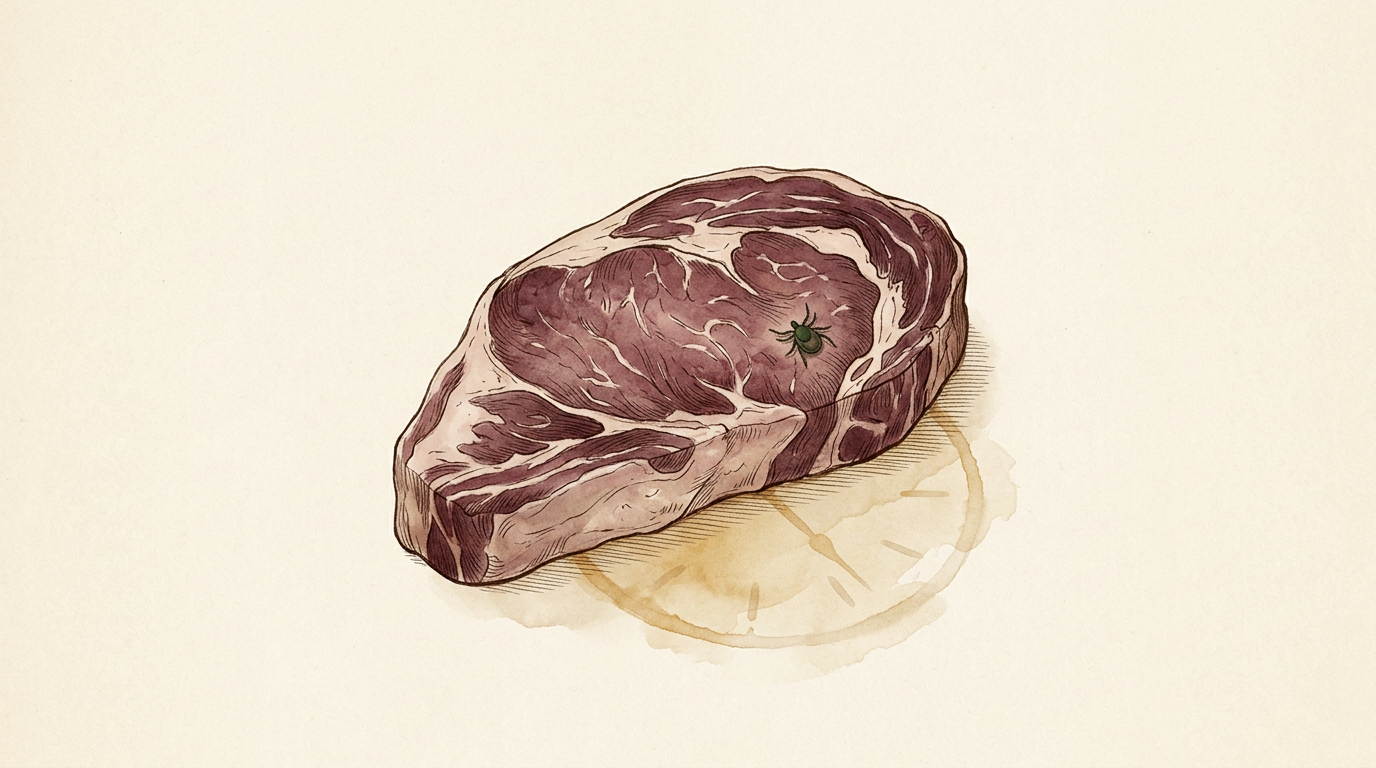
Alpha-Gal Syndrome: The Tick-Borne Meat Allergy Most People Have Never Heard Of
You eat a steak.
Four hours later, you’re covered in hives. Or doubled over with stomach pain. Or your throat starts to close.
You go to the ER. They give you Benadryl, maybe steroids. “Food poisoning,” they say. Or “stress.” Or “IBS.”
Almost nobody asks the one question that matters:
Have you been bitten by a tick?
This is Alpha-Gal Syndrome — a condition affecting hundreds of thousands of Americans that many clinicians still do not routinely think to look for.
There is also an auricular acupuncture treatment being studied for Alpha-Gal Syndrome, with published clinical reports showing remission rates above 90%.
Most patients are never told it exists.
A medical mystery hiding in plain sight
Alpha-Gal Syndrome, or AGS, is an allergic reaction to a sugar molecule called galactose-alpha-1,3-galactose.
This molecule is found in the meat of most mammals, including beef, pork, lamb, venison, and sometimes dairy.
The trigger is usually a tick bite.
In the United States, the best-known culprit is the Lone Star tick. When it bites, it can introduce alpha-gal into your bloodstream. Your immune system may flag the molecule as foreign and build IgE antibodies against it.
From then on, eating mammalian meat can set off an allergic reaction.
What makes Alpha-Gal so hard to catch is that it behaves nothing like a classic food allergy.
The reactions are delayed. Symptoms usually appear three to six hours after eating. You have dinner at 7 p.m. and wake at midnight covered in hives, never connecting the two.
The reactions are inconsistent. You react one day and not the next. Fat content, cooking method, portion size, alcohol, exercise, stress, and overall immune load can all change the response.
The symptoms vary widely. Some people get hives or itching. Others get severe gastrointestinal distress. Some go into full anaphylaxis. Many never show a single skin symptom and get diagnosed with IBS for years.
Awareness is low. A condition that is not on a clinician’s radar rarely gets tested for.
Common Alpha-Gal Syndrome symptoms
Alpha-Gal reactions can look very different from person to person. Some of the most common symptoms include:
- Hives after eating beef, pork, lamb, venison, or other mammalian meat
- Itching or flushing
- Swelling of the lips, face, tongue, or throat
- Severe abdominal pain
- Nausea or vomiting
- Diarrhea
- Heartburn-like symptoms
- Cramping
- Dizziness or feeling faint
- Drop in blood pressure
- Trouble breathing
- Anaphylaxis
One of the most important clues is timing. Because the reaction is delayed, often by several hours, most people never link it back to what they ate. By the time symptoms hit, the meal feels irrelevant and the reaction seems random. That gap between eating and reacting is one of the main reasons Alpha-Gal Syndrome gets missed.
How common is Alpha-Gal Syndrome?
CDC data identified more than 110,000 suspected cases between 2010 and 2022, with estimates suggesting as many as 450,000 Americans may be affected.
Research from VCU Health documented a 100-fold increase in positive Alpha-Gal tests since 2013.
In 2025, researchers reported the first confirmed fatality linked to Alpha-Gal Syndrome: a 47-year-old New Jersey man who died after eating a hamburger at a barbecue.
It is a growing public health problem, especially as tick exposure increases and Lone Star ticks are being found in more regions.
What I see in practice
By the time patients reach me, they usually have a history that does not fit neatly into one box.
Some first notice digestive symptoms — sudden abdominal pain, nausea, diarrhea, cramping, or what gets labeled as “gastritis,” “reflux,” or “IBS.”
There may be no hives at first. No obvious allergic reaction. No clear connection to food, because the reaction happens hours later.
Others start with itching, flushing, or hives. Some have both GI and skin symptoms from the beginning. And in more severe cases, the pattern can include dizziness, low blood pressure, trouble breathing, or full anaphylaxis.
That variability is exactly why Alpha-Gal is so easy to miss. It does not always look like an allergy.
One person gets stomach pain and diarrhea after steak and is sent to a gastroenterologist. Another wakes up covered in hives and is told to take antihistamines. Another reacts only sometimes, depending on the meal, the amount of fat, alcohol, stress, or whether they had another tick bite.
The problem is not that patients ignore symptoms. Most people seek help early.
The problem is that Alpha-Gal rarely enters the differential diagnosis. Patients are treated for gastritis, IBS, chronic hives, reflux, or anxiety while the underlying trigger remains hidden.
The goal is freedom, not management
If you have Alpha-Gal Syndrome, what do you actually want?
To eat at a restaurant without interrogating the waiter. To go to a barbecue without fear. To stop living in anxiety about an accidental bite of the wrong thing. To stop organizing your life around avoidance.
Conventional medicine’s approach is straightforward: avoid all mammalian meat indefinitely, carry epinephrine, and watch for reactions.
That can be lifesaving. But it is not resolution. It is long-term avoidance.
For many patients, the real question is whether that is truly the only option.
A treatment option outside the standard model
SAAT, or Soliman Auricular Allergy Treatment, is an auricular acupuncture technique developed by Dr. Nader Soliman, MD.
A single, tiny needle — roughly 3 mm — is placed at a specific point on the ear that corresponds to the allergen being treated. The needle stays in place for three weeks, secured with surgical tape, and is then removed.
That’s it. No medications. No allergy shots. No exposure challenges during treatment.
Patients should still continue medical care and carry epinephrine if it has been prescribed.
A 2021 study in Medical Acupuncture described 137 patients with Alpha-Gal Syndrome treated with SAAT. Of the 126 patients with outcome data, 121 (96%) reported complete remission — meaning they could eat mammalian meat again without reacting.
A separate clinical report by Dr. Donald Liebell documented a 94.8% success rate across 155 patients.
No adverse reactions to the treatment itself were reported, and remission lasted from months to years. Some patients with a history of anaphylaxis later tolerated accidental — and even intentional — exposure without symptoms.
The proposed mechanism is neurological.
The ear has dense connections to the brain and autonomic nervous system. Auricular acupuncture and auricular neuromodulation have been recognized for decades.
Dr. Soliman identified a specific region on the ear, often called the Soliman Allergy Zone, where targeted stimulation is thought to influence the body’s response to a specific allergen.
Is the mechanism fully mapped? No. But the clinical outcomes are difficult to ignore, especially for a condition where most patients are only offered avoidance.
What to do if you suspect Alpha-Gal Syndrome
Stop the tick exposure
If you spend time outdoors — hiking, gardening, hunting, camping, or working in wooded areas — tick prevention matters.
Use repellent. Wear protective clothing. Check yourself carefully after being outside. Shower after outdoor exposure. Pay attention to pets, clothing, shoes, and gear that may bring ticks indoors.
The Lone Star tick now lives well beyond its historical range, so this is not only a “southern” problem anymore.
Get properly tested
If you have unexplained GI symptoms, hives, or allergic reactions — especially delayed reactions — ask your physician about blood testing for alpha-gal IgE antibodies.
It may also be worth asking about allergy testing for beef, pork, lamb, and dairy, depending on your symptoms. Some people develop separate allergies to specific meats, so alpha-gal testing alone may not always capture the whole picture.
Explore your treatment options
If you test positive and want to consider SAAT, certified practitioners are listed in Dr. Soliman’s official directory.
Frequently Asked Questions About Alpha-Gal Syndrome
Can Alpha-Gal Syndrome cause only digestive symptoms?
Yes. Some people with Alpha-Gal Syndrome never develop obvious hives or skin symptoms. Their main symptoms may be abdominal pain, nausea, diarrhea, cramping, reflux-like symptoms, or what gets labeled as IBS. This is one reason the condition is often missed.
How long after eating meat do Alpha-Gal symptoms appear?
Symptoms usually appear three to six hours after eating mammalian meat, though the timing can vary. That delay is one of the most important clues. Because most food allergies cause an immediate reaction, people do not expect a response that arrives hours later.
What foods can trigger Alpha-Gal Syndrome?
The most common triggers are mammalian meats such as beef, pork, lamb, venison, rabbit, and organ meats. Some people also react to dairy, gelatin, collagen, lard, tallow, or mammal-derived ingredients in medications or supplements. Sensitivity varies from person to person.
Can dairy trigger Alpha-Gal symptoms?
Yes, in some people. Not everyone with Alpha-Gal reacts to dairy, but some do. High-fat dairy products may be more problematic for certain patients. If symptoms continue after removing mammalian meat, dairy and hidden mammal-derived ingredients should be considered.
How is Alpha-Gal Syndrome diagnosed?
Alpha-Gal Syndrome is usually diagnosed with a blood test for alpha-gal specific IgE antibodies, combined with a clinical history that fits the pattern. The history matters. Delayed reactions, tick exposure, symptoms after mammalian meat, and unexplained nighttime hives or GI attacks are all important clues.
Can Alpha-Gal Syndrome go away?
Some patients improve over time, especially if they avoid additional tick bites. But others remain sensitive for years. Repeated tick bites may worsen or reactivate symptoms. That is why tick prevention remains important even after diagnosis and even after successful treatment.
Is Alpha-Gal Syndrome the same as a beef allergy?
No. Alpha-Gal Syndrome is not simply an allergy to beef. It is an immune reaction to a sugar molecule found in most mammals. That means reactions can occur after eating beef, pork, lamb, venison, and other mammalian products. Some patients may also react to dairy, gelatin, or other mammal-derived ingredients.
What tick causes Alpha-Gal Syndrome?
In the United States, Alpha-Gal Syndrome is most strongly associated with the Lone Star tick. Other tick species may also be involved in different parts of the world.
The bigger picture
Alpha-Gal is one of those conditions that can sit in front of everyone for years and still be missed.
The patient knows something is wrong. The reactions are real. The ER visits are real. The fear around food is real.
But because the symptoms do not follow the usual allergy pattern, the diagnosis gets pushed somewhere else — gastritis, IBS, chronic hives, reflux, anxiety. And once a label is placed, everyone stops looking.
That is the part I find most frustrating. Not that Alpha-Gal is impossible to understand — it is actually very logical once you know what to ask.
The problem is that too many patients are never asked the simplest question:
Have you been bitten by a tick?
— Anna Volkova, L.Ac.
I treat allergies and sensitivities like this in my practice. Learn more about working together.
Fascinating. Thanks for writing about this innovative technique. I live in Costa Rica and over time have developed an allergy to something-not meat, thank goodness-and I’m still doing some testing to determine the allergen(s) that leave my throat swollen, my nose stuffed, and my voice hoarse. I’m planning to be in NJ in November and will book a consultation with you if you are available while I’m visiting. Thanks again. John
Hi John,
Thank you so much for your kind comment! I’m glad you found the information helpful. It sounds like you’re doing the right thing by continuing to investigate what may be triggering your reactions.
I’d be happy to see you when you’re in New Jersey in November. Once you know your travel dates, feel free to reach out the office and they can arrange a consultation during your visit.
Wishing you the best,
Anna